Chronic Dry Eye Relief: A Patient’s Story of Hope

Sometimes, Finding HOPE Is the First Step Toward Finding Dry Eye Relief

For patients struggling with chronic dry eye, finding answers isn’t always easy. Sometimes, the most meaningful first step is finding a doctor who listens, understands, and offers a path forward.

chronic dry eye treatment

When Living With Dry Eye Becomes a Daily Struggle

For millions of people, dry eye is more than an occasional irritation.

It’s the burning sensation that makes it difficult to concentrate at work. The fluctuating vision that interferes with reading or using a computer. The redness, discomfort, and sensitivity to light that can turn ordinary activities into daily challenges.

And for some patients, perhaps the most frustrating part isn’t just the physical discomfort.

It’s the feeling that they’ve tried everything.

Artificial tears. Warm compresses. Prescription eye drops. Different treatments recommended by different doctors.

Yet the symptoms persist.

Over time, it’s understandable that some people begin to wonder whether they’ll ever find meaningful relief.

But chronic dry eye is often more complicated than simply not producing enough tears. And understanding what’s actually causing the symptoms can make an important difference.

One Patient’s Experience: Finding Something She Had Been Missing

At The Dry Eye Center of Maryland at Azman Eye Care Specialists, we recently received a five-star Google review that reminded us why listening to patients is such an important part of specialized eye care.

The patient described her experience with Dr. Azman:

“Dr. Azman was incredibly thorough, compassionate, and attentive throughout my visit. He took the time to truly listen to all of my concerns and symptoms and explained the additional test results in a way that was detailed and easy to understand.”

Those words reflect something we believe every patient deserves: the opportunity to be heard, to have their concerns taken seriously, and to understand what’s happening with their eyes.

But it was the next part of her review that especially stood out to us.

“He also offered the option of a same-day procedure, which gave me hope and an important first step toward finding relief and beginning my journey toward healing my dry eyes.”

One word captured the significance of that experience.

HOPE.

Not a promise of an immediate cure. Not a guarantee that every symptom would disappear.

But the reassurance that there might be another option worth exploring.

For someone living with persistent dry eye symptoms, that can be incredibly meaningful.

Why Dry Eye Symptoms Sometimes Persist Despite Treatment

Many people think of dry eye as a relatively simple condition caused by insufficient tear production.

In reality, dry eye disease can involve several different mechanisms, sometimes occurring together.

Some patients don’t produce enough tears. Others produce tears that evaporate too quickly. Still others experience inflammation that interferes with the normal function of the tear film and ocular surface.

One common contributing factor is meibomian gland dysfunction (MGD).

The meibomian glands are tiny oil-producing glands located along the eyelid margins. Their job is to release oils that help stabilize the tear film and slow tear evaporation.

When these glands become blocked or don’t function properly, tears may evaporate too quickly, contributing to burning, irritation, redness, and fluctuating vision.

Other conditions, including ocular rosacea, eyelid inflammation, and abnormalities of the ocular surface, may also contribute to persistent symptoms.

This is why two patients who both complain of “dry eyes” may have very different underlying problems.

And it’s why a treatment that helps one person may not be appropriate or effective for another.

The Importance of Looking Beyond the Symptoms

When dry eye symptoms continue despite conventional treatment, a more detailed evaluation may help identify contributing factors that haven’t been adequately addressed.

At The Dry Eye Center of Maryland, our approach begins with understanding the patient’s history, symptoms, previous treatments, and how dry eye is affecting everyday life.

Specialized diagnostic testing may provide additional information about tear film stability, meibomian gland function, inflammation, and the health of the ocular surface.

These findings can help guide a more individualized treatment plan.

But testing is only part of the process.

Equally important is helping patients understand what the results mean.

For someone who has struggled with unexplained symptoms, finally receiving a clear explanation can be reassuring.

It can transform a confusing and frustrating experience into a more understandable medical problem with potential treatment options.

As the patient in our review emphasized, Dr. Azman took the time to explain her additional test results in a way that was detailed and easy to understand.

That kind of communication is an essential part of patient-centered care.

When Traditional Dry Eye Treatments Aren’t Enough

Artificial tears and other conventional treatments play an important role in managing dry eye disease.

For some patients, these approaches provide sufficient relief.

For others, especially those with significant meibomian gland dysfunction, inflammation, or complex ocular surface disease, additional treatment options may be considered.

Depending on the underlying findings, specialized dry eye management may involve therapies designed to improve meibomian gland function, address inflammation, support tear film stability, or manage associated eyelid conditions.

Some patients may benefit from in-office procedures, including thermal treatments, gland expression, or Intense Pulsed Light (IPL) therapy when clinically appropriate.

Not every patient requires advanced treatment, and no single procedure is effective for everyone.

The goal is to identify the factors contributing to each patient’s symptoms and recommend an appropriate, individualized approach.

In the case of the patient who shared this review, Dr. Azman offered the option of a same-day procedure.

The review doesn’t describe the specific procedure or its eventual outcome. What the patient emphasized was that having an option available gave her a renewed sense of hope.

And that distinction matters.

Hope Doesn’t Mean Promising a Cure

Chronic dry eye disease can be challenging to manage, particularly when multiple underlying factors are involved.

Some patients experience substantial improvement with appropriate treatment. Others require ongoing management, adjustments to their treatment plan, or a combination of therapies.

There is no universal solution.

That’s why responsible dry eye care should never begin with unrealistic promises.

Instead, it should begin with careful evaluation, clear communication, and an honest discussion of what may be possible.

For patients who have spent months or years searching for answers, understanding their condition and learning about available treatment options can be an important step forward.

Sometimes, hope begins not with a treatment itself, but with finally understanding why previous treatments may not have worked.

Specialized Dry Eye Care in Baltimore County

For residents of Pikesville, Towson, Lutherville, Timonium, and surrounding Maryland communities, specialized dry eye evaluation and treatment are available close to home.

The Dry Eye Center of Maryland at Azman Eye Care Specialists, located on Clarkview Road near the Bare Hills area of Baltimore County, focuses on diagnosing and managing chronic dry eye and complex ocular surface conditions.

Our philosophy is straightforward: listen carefully, investigate the underlying causes, explain the findings, and develop an individualized treatment plan based on each patient’s needs.

We recognize that many people seeking specialized dry eye care have already experienced considerable frustration.

Some have tried multiple treatments. Others have been told their eyes look relatively normal despite persistent discomfort. Many simply want to understand why they continue to experience symptoms.

Every patient’s situation is different.

But every patient deserves to feel heard and to understand the options available to them.

Sometimes, the Most Important First Step Is Finding Hope

The final words of this patient’s review captured the experience beautifully:

“I’m very grateful for the care and time he took with me and would highly recommend Dr. Azman to anyone looking for specialized care for dry eye beyond what they may receive from their regular ophthalmologist.”

We’re grateful to this patient for sharing her experience and trusting our team with her care.

Her review is a reminder that the impact of healthcare isn’t measured only by procedures performed or treatments prescribed.

It’s also reflected in the confidence patients gain when their concerns are taken seriously, their questions are answered, and they begin to understand their condition.

For someone living with chronic dry eye, that experience can mean more than we sometimes realize.

Because sometimes, finding HOPE really is the first step toward finding dry eye relief.


Frequently Asked Questions About Chronic Dry Eye

Why do my eyes still feel dry even after using eye drops?

Persistent dry eye symptoms can have several underlying causes, including meibomian gland dysfunction (MGD), inflammation, insufficient tear production, or excessive tear evaporation. Artificial tears may provide temporary relief without addressing all the factors contributing to your symptoms. A comprehensive dry eye evaluation can help identify possible causes and guide more personalized treatment.

Can chronic dry eye be treated if other treatments haven’t worked?

Yes. Patients who haven’t experienced sufficient relief from conventional treatments may have additional options. Depending on the underlying cause, treatment may involve therapies targeting eyelid inflammation, meibomian gland function, or tear film stability. While no treatment works for everyone, specialized testing can help determine which approaches may be appropriate.

What is meibomian gland dysfunction, and how does it cause dry eye?

Meibomian gland dysfunction (MGD) occurs when the oil-producing glands along the eyelids become blocked or do not function properly. These glands produce oils that help prevent tears from evaporating too quickly. When their function is disrupted, the tear film may become unstable, leading to burning, irritation, redness, and fluctuating vision.

When should I see a dry eye specialist?

Consider seeking a specialized dry eye evaluation if you experience persistent burning, irritation, redness, watery eyes, light sensitivity, or fluctuating vision despite using eye drops or other treatments. A more detailed evaluation may identify contributing factors that require a different treatment approach.

Is there hope for people who have struggled with chronic dry eye for years?

Yes. Although chronic dry eye can be challenging to manage, advances in diagnostic testing and treatment provide additional options for many patients. Identifying the underlying causes and developing an individualized management plan may help improve symptoms and quality of life. Results vary, and some patients require ongoing care rather than a one-time treatment.

Still Searching for Answers About Your Dry Eyes?

If you’re experiencing persistent burning, irritation, redness, watery eyes, light sensitivity, or fluctuating vision despite using eye drops or other treatments, a comprehensive dry eye evaluation may help identify underlying causes and appropriate treatment options.

At The Dry Eye Center of Maryland, we provide specialized diagnostic testing and individualized care for patients with chronic dry eye, meibomian gland dysfunction, ocular rosacea, and other ocular surface conditions.

The Dry Eye Center of Maryland at Azman Eye Care Specialists

1427 Clarkview Road, Suite 200
Baltimore, MD 21209

Website: https://dryeyecenterofmd.com |  https://www.azmaneye.com

Read the patient’s original five-star Google review:
https://maps.app.goo.gl/RWgX4HeLLjcDYJfz9

Patient experiences and treatment outcomes vary. This article is intended for educational purposes and does not replace a comprehensive eye examination or individualized medical advice.
Dry Eye Treatment in Baltimore County: A Patient’s Story

Why Would Someone Drive Two Hours for Dry Eye Treatment in Baltimore County?

For one patient struggling with ocular rosacea, specialized dry eye treatment was only part of the story. Finding a doctor who truly listened and cared made the journey worthwhile.

For most people, driving two hours to see an eye doctor might seem unusual. After all, there are eye care offices in nearly every community.

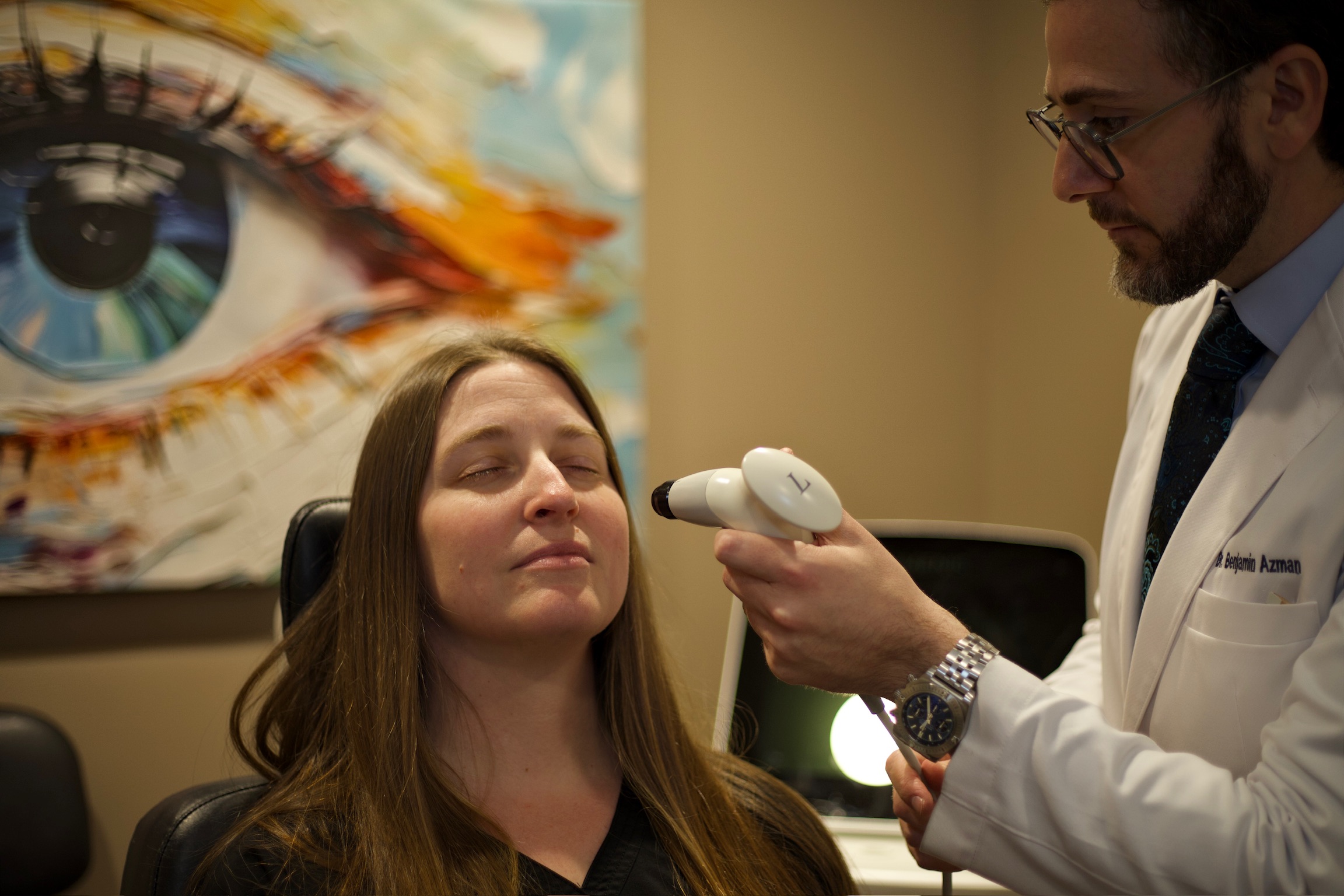
Dr. Benjamin Azman performing IPL treatment for dry eye at The Dry Eye Center of Maryland, Azman Eye Care Specialists in Baltimore County.

But for patients struggling with chronic dry eye, ocular rosacea, or persistent eye irritation, finding the right care isn’t always as simple as choosing the closest provider.

At Azman Eye Care Specialists and The Dry Eye Center of Maryland, we’ve had the privilege of caring for patients who travel significant distances seeking specialized eye care.

One patient’s recent five-star Google review offers a meaningful reminder of why some people are willing to make that journey.

“I drive 2 hours to Dr. Azman and it is worth it! Highly recommend!!!”

While the distance is noteworthy, what makes this patient’s experience particularly special goes beyond the treatment itself.

A Personal Phone Call That Made a Lasting Impression

The patient had been receiving Intense Pulsed Light (IPL) treatments for ocular rosacea, an inflammatory condition that can affect the eyelids, tear film, and ocular surface.

Before her first treatment, she was nervous and had questions about what to expect.

She emailed our office expressing her concerns.

Rather than simply responding by email, Dr. Benjamin Azman personally called her to answer her questions and help her feel more comfortable about the procedure.

That simple act of personal attention left a lasting impression.

As the patient shared in her Google review:

“You don’t find doctors like that anymore. He is great at what he does and truly cares how you are feeling.”

She also recognized the support she received from our team, describing the office staff as friendly and helpful.

For us, that feedback is especially meaningful.

Advanced diagnostic equipment and specialized treatments are important, but so is making sure patients understand their condition, feel comfortable asking questions, and have confidence in their care.

Why Chronic Dry Eye Isn’t Always a Simple Problem

Millions of Americans experience dry eye symptoms, including burning, irritation, redness, excessive tearing, light sensitivity, and fluctuating or blurry vision.

Many people initially turn to over-the-counter artificial tears, warm compresses, or other home remedies.

While these approaches can provide relief, they may not adequately address the underlying cause of persistent symptoms.

Dry eye disease is a complex condition that can involve multiple contributing factors.

One of the most common is meibomian gland dysfunction (MGD).

The meibomian glands are tiny oil-producing glands located along the edges of the eyelids. They produce an oily layer that helps prevent tears from evaporating too quickly.

When these glands become blocked or fail to function properly, the tear film may become unstable, contributing to evaporative dry eye.

Inflammatory conditions such as ocular rosacea can further complicate the problem.

For patients whose symptoms persist despite conventional treatment, a more comprehensive evaluation may help identify what’s contributing to their discomfort.

Understanding Ocular Rosacea and Its Connection to Dry Eye

Ocular rosacea is an inflammatory condition that affects the eyes and surrounding eyelid tissues.

Although rosacea is commonly associated with facial redness and skin inflammation, it can also affect the ocular surface and meibomian glands.

Symptoms may include:

  • Burning, stinging, or irritated eyes
  • Persistent redness along the eyelid margins
  • Dryness or excessive watering
  • Sensitivity to light
  • Fluctuating or blurry vision
  • Recurrent eyelid inflammation

Not everyone with ocular rosacea experiences the same symptoms, and the condition can sometimes go unrecognized.

Because ocular rosacea may contribute to meibomian gland dysfunction and tear film instability, identifying these underlying issues is an important part of developing an individualized treatment plan.

How IPL Treatment May Help Certain Dry Eye Patients

One treatment option for selected patients with dry eye disease associated with meibomian gland dysfunction is Intense Pulsed Light (IPL) therapy.

IPL uses carefully controlled pulses of light applied to the skin around the eyes.

Depending on the device and treatment protocol, IPL may help reduce abnormal blood vessels and inflammatory processes associated with ocular rosacea and meibomian gland dysfunction.

Certain IPL systems have received FDA authorization for treating signs of dry eye disease associated with meibomian gland dysfunction.

IPL treatment is not appropriate for every patient, and the number of sessions, expected benefits, and treatment recommendations depend on individual clinical findings.

At The Dry Eye Center of Maryland, specialized testing helps guide treatment recommendations based on each patient’s condition and needs.

For the patient who shared this recent review, her experience with IPL treatment was positive.

As she wrote:

“I have had several IPL treatments with him for ocular rosacea and not only am I doing great, he has helped me every step of the way.”

Her experience illustrates how clinical care and personal attention can work together to create a positive patient experience.

Individual results vary, and a comprehensive evaluation is necessary to determine which treatments may be appropriate.

Specialized Dry Eye Care Right Here in Baltimore County

One of the most interesting aspects of this patient’s story is the distance she travels for her appointments.

While some patients drive hours seeking specialized dry eye treatment, residents of Pikesville, Towson, Lutherville, Timonium, and surrounding Baltimore County communities have access to these services close to home.

The Dry Eye Center of Maryland at Azman Eye Care Specialists is located on Clarkview Road near the Bare Hills area of Baltimore County.

Our approach focuses on understanding why a patient is experiencing persistent symptoms rather than simply addressing dryness with temporary solutions.

Depending on the patient’s needs, an evaluation may include specialized testing of the tear film, meibomian glands, and ocular surface to help identify contributing factors.

Treatment recommendations are individualized and may include various approaches to managing inflammation, improving meibomian gland function, and supporting a healthier tear film.

For people who have been struggling with dry eye symptoms for months or even years, understanding the underlying cause can be an important first step toward finding appropriate care.

Sometimes, It’s the Little Things That Matter Most

In healthcare, it’s easy to focus on technology, new treatments, and medical advancements.

But patients often remember something much simpler.

A doctor who takes the time to listen.

An explanation that finally makes sense.

A personal phone call when they’re feeling nervous.

A friendly team that makes them feel welcome.

These are the experiences that help build trust between patients and their healthcare providers.

We’re incredibly grateful to this patient for sharing her experience and recognizing both Dr. Azman and our dedicated staff.

Her words serve as a reminder of something we believe strongly:

Exceptional eye care isn’t just about the treatments we provide. It’s about how we care for the people who trust us with their vision.

And sometimes, the specialized care people travel hours to find may be right in their own backyard.


Frequently Asked Questions About Dry Eye Treatment in Baltimore County

1. What causes chronic dry eye symptoms that don’t improve with eye drops?

Chronic dry eye can result from several underlying conditions, including meibomian gland dysfunction (MGD), ocular rosacea, inflammation, insufficient tear production, or excessive tear evaporation. Artificial tears may temporarily relieve symptoms without addressing their underlying causes. Specialized dry eye testing can help identify contributing factors and guide a personalized treatment plan.

2. What is ocular rosacea, and how is it related to dry eye?

Ocular rosacea is an inflammatory condition that affects the eyes and eyelids. It can interfere with the meibomian glands, which produce oils that help prevent tears from evaporating too quickly. Symptoms may include burning, redness, irritation, watery eyes, light sensitivity, and fluctuating vision. Ocular rosacea can contribute to chronic evaporative dry eye.

3. How does IPL treatment help patients with dry eye and ocular rosacea?

Intense Pulsed Light (IPL) therapy delivers controlled pulses of light to the skin around the eyes. For appropriately selected patients, IPL may help reduce inflammatory processes associated with ocular rosacea and improve signs of dry eye related to meibomian gland dysfunction. Certain IPL devices have FDA authorization for specific dry eye indications. Treatment suitability and results depend on each patient’s condition.

4. When should I consider seeing a dry eye specialist?

Consider a specialized dry eye evaluation if you continue experiencing burning, redness, irritation, light sensitivity, watery eyes, or fluctuating vision despite using artificial tears or other treatments. A comprehensive assessment may identify underlying conditions that require a more individualized approach.

5. Where can I find specialized dry eye treatment in Baltimore County, Maryland?

The Dry Eye Center of Maryland at Azman Eye Care Specialists provides specialized evaluation and treatment for chronic dry eye, meibomian gland dysfunction, ocular rosacea, and related ocular surface conditions. The office is located at 1427 Clarkview Road, Suite 200, Baltimore, MD 21209, near the Bare Hills area of Baltimore County, serving patients from Pikesville, Towson, Lutherville, Timonium, and surrounding communities.

Looking for Answers About Persistent Dry Eye?

If you’ve been struggling with chronic dry eye, ocular rosacea, burning, irritation, or fluctuating vision despite conventional treatments, a specialized dry eye evaluation may help identify contributing factors and determine appropriate treatment options.

The Dry Eye Center of Maryland at Azman Eye Care Specialists

1427 Clarkview Road, Suite 200
Baltimore, MD 21209

Website: https://www.azmaneye.com

Read the patient’s original five-star Google review:
https://maps.app.goo.gl/mKFQpMMLb2CU2oAF7?g_st=ic

Patient experiences and treatment outcomes vary. The information provided is for educational purposes and does not replace an individualized medical evaluation.

I drove 1 hour and 45 minutes each way for Keratoconus Help… and now I’m seeing the BEST I’ve ever seen!

Keratoconus Specialists

“I drove 1 hour and 45 minutes each way… and now I’m seeing the BEST I’ve ever seen!”

When patients tell us they’ve spent years searching for better vision, we understand how frustrating that journey can be.

This patient traveled 1 hour and 45 minutes each way to visit our practice after feeling disappointed by previous experiences elsewhere. After being fitted with specialty scleral lenses, they shared:

“I’m seeing THE BEST I’ve ever seen!”


For many people living with keratoconus, corneal irregularities, post-surgical complications, or other complex corneal conditions, standard glasses and contact lenses simply aren’t enough. That’s where advanced specialty scleral lenses can make a life-changing difference.

Every day, we help patients who have been told they’ve run out of options discover what’s possible when they receive truly specialized care.

Frequently Asked Questions About Keratoconus and Specialty Contact Lenses

1. What is keratoconus, and how does it affect vision?

Keratoconus is a progressive eye condition in which the cornea gradually becomes thinner and develops an irregular, cone-like shape. This irregularity can cause blurry or distorted vision, glare, halos, light sensitivity, and difficulty seeing clearly with conventional glasses or soft contact lenses. Symptoms and severity vary from person to person.

2. Can specialty scleral lenses improve vision for someone with keratoconus?

Yes. Specialty scleral lenses can provide significant visual improvement for many patients with keratoconus, particularly when traditional glasses or contact lenses no longer provide satisfactory vision. These custom-designed lenses vault over the irregular cornea and create a smooth optical surface, helping reduce visual distortion and improve clarity. Results depend on the severity of the condition and individual eye characteristics.

3. Why might glasses or regular contact lenses not work well for keratoconus?

As keratoconus progresses, the cornea can become increasingly irregular. Glasses and conventional soft contact lenses may not adequately compensate for the resulting optical distortions. Specialty lenses, including custom scleral lenses, are designed to address irregular corneal surfaces and may provide clearer, more stable vision for appropriately selected patients.

4. Do scleral lenses stop keratoconus from progressing?

No. Scleral lenses are primarily used to improve vision and, in some cases, comfort. They do not stop keratoconus progression. Corneal collagen cross-linking is a separate treatment that may be recommended to slow or halt progression in appropriate patients. A comprehensive evaluation can help determine whether vision correction, disease-stabilizing treatment, or both are needed.

5. Where can I find a keratoconus specialist in Baltimore County, Maryland?

Keratoconus Specialists of Maryland at Azman Eye Care Specialists provides specialized evaluation and custom contact lens fitting for patients with keratoconus and other irregular corneal conditions. The office is located at 1427 Clarkview Road, Suite 200, Baltimore, MD 21209, near the Bare Hills area of Baltimore County. Patients visit from Towson, Pikesville, Lutherville, Timonium, and surrounding communities.

6. Is it worth traveling to a specialist for keratoconus treatment?

For patients who continue struggling with distorted vision, uncomfortable contact lenses, or difficulty achieving clear vision with conventional correction, a specialist experienced in fitting complex corneas may offer additional options. Custom scleral lens fitting requires specialized measurements, expertise, and follow-up care. Although individual results vary, some patients choose to travel significant distances to access this type of specialized care.


Have you ever been told there was “nothing more that could be done” for your vision?

There may be options you haven’t explored yet.

📍 Serving patients from across Maryland and beyond
📞 410-469-7111
🌐 keratoconusbaltimore.org

Thank you for trusting our team with your vision and for sharing your experience!

Poorly Managed Keratoconus Corrected | Patient Testimonial

When it comes to managing Keratoconus, there is a massive difference between a standard eye exam and specialized, custom care.
Many patients come to our office completely exhausted. They have spent years dealing with blurry vision, ghosting, and daily eye irritation, often being told by well-meaning practitioners that their vision is “as good as it gets” for their condition.
But you do not have to live in discomfort to see clearly.
In this patient testimonial, she opens up about her history of poorly managed keratoconus and the daily suffering caused by her prior lenses. After taking the time to precisely map her unique corneal irregularities and consult on her specific lifestyle needs, we were able to deliver a 100% vision improvement!
🎥 Watch her full story here: https://youtu.be/LrJnCwGYr7A
Why generic contact lenses fail Keratoconus patients:
Irregular Surfaces: Keratoconus causes the cornea to thin and bulge into an irregular cone shape. Standard soft or generic hard lenses cannot align correctly, causing constant friction.
Corneal Irritation: Poorly fit lenses slide around, leading to redness, corneal scarring, and a “bulging” or burning sensation.
The Specialty Difference: Advanced custom medical lenses (like scleral lenses) vault completely over the sensitive cornea, bathing the eye in a continuous reservoir of soothing hydration while providing crisp, stable, high-definition vision.
If your current lenses are a daily struggle, stop settling for “good enough” vision. Your keratoconus can be managed comfortably.
Ready to experience a 100% turnaround in your sight? Schedule your comprehensive specialty consultation with our team today.
📞 Call Our Specialists: (410) 469-7111
📧 Email: info@complexeyecare.com

Scleral Lenses for Keratoconus: Listen to her Keratoconus journey to great vision!

Diagnosed with keratoconus in 1995 this patient had a cornea transplant on her right eye. For many years she wore hard lenses with nor problems. But recently she started to feel discomfort with the heard lenses and noticed a difference in her vision, that affected her daily life.

Thankfully she found Dr. Azman! She is now wearing custom scleral lenses, which are very comfortable and are providing her with crisp, clear, 20/20 vision!

Contact Baltimore’s top Keratoconus doctors if you are suffering from poor vision due to Keratoconus. https://keratoconusbaltimore.org/ (410) 469-7111

Keratoconus Specialists of Maryland
Serving patients from the following areas since 1975:
MARYLAND: Annapolis, Baltimore, Bel Air, Bethesda, Bowie, Carney, Cockeysville, Columbia Crofton, Elkton, Essex, Fallston, Fredrick, Glenwood, Hampstead, Havre de Grace, Jarrettsville, Kingsville, Laurel, Lutherville, Manchester, Monkton, Parkton, Parkville, Perry Hall, Phoenix, Pikesville, Potomac, Randallstown, Reisterstown, Rockville, Severn, Severna Park, Silver Spring, Sparks-Glencoe, Sparrows Point, Towson, and Westminster. VIRGINIA: Alexandria, Fairfax, Leesburg, Manassas, Reston, Tysons Corner, and Vienna. Washington D.C. Pennsylvania: Allentown, Gettysburg, Harrisburg, Lancaster, Reading, Shrewsbury, and York.

Keratoconus Contact Lenses Video Testimonial | Baltimore, Maryland

Keratoconus Contact Lenses wearer in Baltimore, Maryland talks about his successful keratoconus treatment.

Contact Baltimore’s top Keratoconus doctors if you are suffering from poor vision due to Keratoconus. https://keratoconusbaltimore.org/ (410) 469-7111

Keratoconus Specialists of Maryland | Serving patients from the following areas since 1975:
MARYLAND: Annapolis, Baltimore, Bel Air, Bethesda, Bowie, Carney, Cockeysville, Columbia Crofton, Elkton, Essex, Fallston, Fredrick, Glenwood, Hampstead, Havre de Grace, Jarrettsville, Kingsville, Laurel, Lutherville, Manchester, Monkton, Parkton, Parkville, Perry Hall, Phoenix, Pikesville, Potomac, Randallstown, Reisterstown, Rockville, Severn, Severna Park, Silver Spring, Sparks-Glencoe, Sparrows Point, Towson, and Westminster. VIRGINIA: Alexandria, Fairfax, Leesburg, Manassas, Reston, Tysons Corner, and Vienna. Washington D.C. Pennsylvania: Allentown, Gettysburg, Harrisburg, Lancaster, Reading, Shrewsbury, and York.

Contact Lenses for Dry Eye | Baltimore Maryland

The Dry Eye Center of Maryland
2219 York Rd #101-D
Lutherville-Timonium, MD 21093

Treating Dry Eye | Meibomian Gland Dysfunction (MGD) | Blepharitis Treatment in Baltimore MD

https://www.google.com/search?q=the-dry-eye-center-of-maryland.business.site&gbv=1&sei=k4mtX8ChMYGprgSUs7jAAg

https://www.google.com/maps/place/The+Dry+Eye+Center+of+Maryland/@39.4476432,-76.6286789,15z/data=!4m5!3m4!1s0x0:0x3f0c686c31f3cf0d!8m2!3d39.4476432!4d-76.6286789?shorturl=1

https://www.google.com/search?q=dry+eye+doctor+baltimore&kponly=&gmid=/g/11b5wqn0xr

I have been struggling with my vision for a few years, and I tried both contacts and glasses. Her previous lenses were extremely scratchy and irritating to the eye. “It felt almost like sand was in my eyes.” After visiting a few other eye doctors she found Dr. Azman and the Dry Eye Center of Maryland – “This is the first time I’ve been able to see this well in years!”